
Insights
AI Driven Meeting Notes That Lead to Action
AI driven meeting notes turn meeting talk into clear decisions, assigned owners, and follow-up-ready records that keep teams moving after the call.
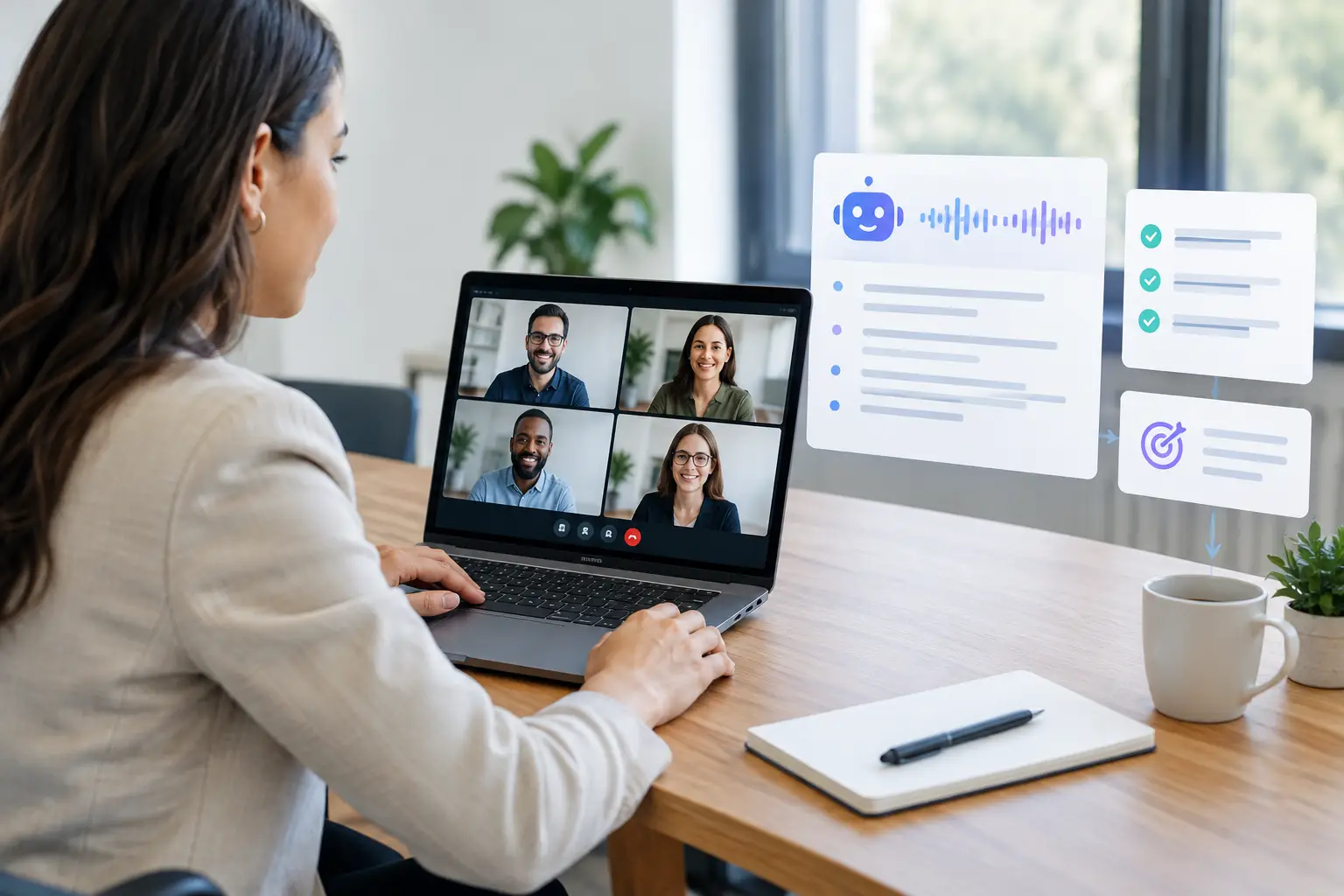
A project slips because a decision made on Tuesday never reaches the person doing the work on Wednesday. A client asks for an update, and the team discovers three different versions of the same commitment. These are not communication problems in the abstract. They are the cost of meetings that end without a dependable record. AI driven meeting notes help close that gap by turning conversation into decisions, responsibilities, and next steps people can act on.
For busy teams, the value is not a longer transcript or a cleaner recording. It is knowing what changed, who owns the work, and when the team needs to reconnect. That is the difference between documenting a meeting and moving work forward.
What AI Driven Meeting Notes Should Actually Produce
Many meeting tools can capture words. That is useful, but raw conversation is rarely the deliverable. A 45-minute transcript can preserve every comment while still forcing a manager, project lead, or account owner to hunt for the two items that matter.
Useful AI driven meeting notes create a structured operational record. They separate context from commitment and distinguish a discussion point from a decision. After the meeting, a reader should be able to answer a few practical questions quickly: What was decided? What needs to happen next? Who is responsible? What is the deadline or follow-up point?
That structure matters most when people were not in the room. An executive joining late, a distributed teammate starting their day in another time zone, or a new project contributor should not need to replay a call to understand the current state of work. Clear minutes give them the working context without adding another status meeting.
The best output is usually concise. It captures enough detail to prevent ambiguity, but it does not turn every meeting into a lengthy report. If a note cannot help someone make a decision, complete a task, or understand a commitment, it may not belong in the final minutes.
Why Transcripts Alone Do Not Create Accountability
A transcript records what was said. Accountability requires interpretation and organization.
Consider the common phrase, “I can take a look at that next week.” In a transcript, that statement may sit between several unrelated comments. In useful meeting minutes, it becomes an action item only after the team confirms the owner, the expected outcome, and the timing. “Jordan will review the revised pricing model and share recommendations by Thursday” gives the team something it can track.
AI can identify likely action items, decisions, risks, and open questions at speed. But teams still need a clear standard for what counts as a commitment. A good system should make it easy to review the output, correct an owner, add context, or remove an item that was merely exploratory.
This is where many organizations get stuck. They assume the problem is note-taking, when the deeper issue is inconsistency. One manager writes detailed recaps. Another sends a short chat message. A third expects everyone to remember. AI-driven documentation creates a repeatable format, so follow-through does not depend on who happened to attend or who volunteered to take notes.
The Meeting-to-Action Workflow
AI works best when it supports a disciplined workflow rather than replacing one. The process starts before the meeting ends.
First, use the final minutes of the conversation to confirm decisions and commitments out loud. This prevents the system from having to infer intent where the team can provide clarity directly. A simple question such as, “Before we close, who owns each next step?” often resolves the ambiguity that creates follow-up churn later.
Next, review the generated notes soon after the call. The reviewer does not need to rewrite every sentence. They should verify the details with operational consequences: names, deadlines, client commitments, budget decisions, and anything that changes project scope. Fast review is especially important for sensitive discussions, where nuance can matter more than speed.
Then, distribute the finalized record where the work happens. A meeting summary trapped in an inbox is easy to overlook. The notes should be available to the people accountable for action and useful to those who need visibility. SiteMinutes AI is built around this outcome: converting meeting content into organized minutes, decisions, assignments, and follow-up-ready documentation.
Finally, use the next meeting to revisit unresolved items. This creates continuity. Instead of spending the first 15 minutes reconstructing the prior conversation, the team begins with the open actions, completed work, and decisions that need attention.
What Good Meeting Minutes Look Like
The format should match the meeting type. A leadership meeting may need strategic decisions, risks, and cross-functional dependencies. A project standup may need blockers, ownership changes, and due dates. A client call may need agreed deliverables, questions to answer, and commitments that affect the relationship.
Still, strong minutes usually contain the same core components: a brief purpose or context, key decisions, action items with owners, unresolved questions, and the next checkpoint. This structure gives people a consistent place to look without making every meeting feel bureaucratic.
Specificity is the key. “Marketing to follow up” is not an action item. “Priya will send the approved launch copy to the sales team by 3 p.m. Friday” is. Likewise, “The team discussed the timeline” provides little value. “The launch moved from May 12 to May 26 due to the integration dependency” preserves the decision and its reason.
There is a trade-off. Notes that are too brief can erase important context, while notes that are too detailed make the critical items hard to find. For routine meetings, prioritize execution. For decisions with legal, financial, customer, or people implications, retain more context and ensure an accountable reviewer validates the record.
Where AI Needs Human Judgment
AI can make documentation faster, but it should not become the unchallenged authority on what happened. Language is messy. People interrupt, change their minds, use shorthand, and speak conditionally. A system may detect a proposed decision when the group had not actually agreed, or assign work based on a casual suggestion.
Human review is particularly valuable when meetings include confidential information, complex negotiations, performance discussions, or high-stakes commitments. Teams should also establish clear rules for consent, access, retention, and recording. The right level of oversight depends on the meeting, the organization’s policies, and the consequences of getting a detail wrong.
The goal is not to add another administrative task. It is to focus human attention on the items that need judgment while letting AI handle the repetitive work of capturing, organizing, and drafting.
Measuring Whether Notes Are Improving Meetings
The real test is not whether the notes look polished. It is whether the team spends less time asking what was decided and more time completing the work.
Look for fewer duplicate follow-ups, clearer handoffs, and fewer meetings spent rehashing the prior meeting. Project leaders may see fewer missed dependencies because owners and deadlines are visible earlier. Client-service teams may find it easier to maintain continuity when an account changes hands. Leaders may gain a more reliable view of decisions without asking every team for a separate recap.
If the notes repeatedly surface vague ownership or missing deadlines, that is useful evidence too. It may reveal that the team needs better meeting habits, not a different tool. AI can expose unclear operating practices, but people still need to decide how they will work together.
The next time a meeting ends, do not settle for a recording that proves the conversation happened. Leave with a record that makes the next action obvious. That small shift turns meetings from a place where work is discussed into a place where work gets assigned, understood, and completed.